BirdUp · Species
Yellow-faced Honeyeater
Caligavis chrysops(Latham, 1801)
Updated
- Order
- PASSERIFORMES
- Family
- Meliphagidae
- Genus
- Caligavis
At a glance
The Yellow-faced Honeyeater is a small bird, about 15–18 cm long, listed as Least Concern and endemic to Australia. It can be seen year-round.
- Size
- 15–18 cm
- Conservation status
- Least Concern
- Origin
- Endemic
- Best seen
- Year-round
- Commonness
- Endemic
01 · Identification
How to tell it apart
What does a Yellow-faced Honeyeater look like?
The Yellow-faced Honeyeater is a small bird, about 15–18 cm long and weighing 12–22 g, identified by its distinct yellow stripe curving below eye, double black stripes framing yellow facial stripe, small white patch on ear coverts and olive-green panel on folded wing.
The yellow-faced honeyeater is a small to medium-sized bird in the honeyeater family, Meliphagidae. It takes its common and scientific names from the distinctive yellow stripes on the sides of its head. Its loud, clear call often begins twenty or thirty minutes before dawn. It is widespread across eastern and southeastern Australia, in open sclerophyll forests from coastal dunes to high-altitude subalpine areas, and woodlands along creeks and rivers. Comparatively short-billed for a honeyeater, it is thought to have adapted to a diet of flies, spiders, and beetles, as well as nectar and pollen from the flowers of plants, such as Banksia and Grevillea, and soft fruits. It catches insects in flight as well as gleaning them from the foliage of trees and shrubs.
Description · wikipedia · CC BY-SA 4.0
- 01
Distinct yellow stripe curving below eye
A bright, narrow yellow line runs from the gape and arcs neatly under the eye.
- 02
Double black stripes framing yellow facial stripe
Sharp black eyeline runs above the yellow stripe, with a second black malar stripe below.
- 03
Small white patch on ear coverts
A clean white tuft of feathers located at the posterior end of the yellow facial stripe.
- 04
Olive-green panel on folded wing
Distinct panel formed by olive-green outer edges of flight feathers when the wing is folded.
03 · When
When to look
When can you see a Yellow-faced Honeyeater?
The Yellow-faced Honeyeater is present across its Australian range year-round, so it can be seen in any month.
- Jan
- Feb
- Mar
- Apr
- May
- Jun
- Jul
- Aug
- Sep
- Oct
- Nov
- Dec
04 · Voice
What it sounds like
What sound does a Yellow-faced Honeyeater make?
Recordings of the Yellow-faced Honeyeater on BirdUp feature its song.
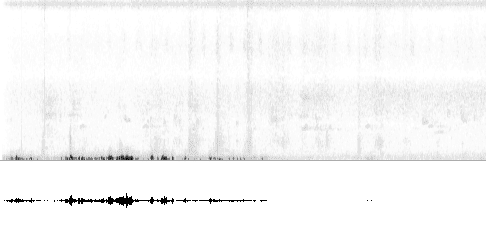
song · Quality B
James Ray · Faulconbridge, Blue Mountains City Council, New South Wales, Australia
Call
John Cull · Wantirna South VIC 3152, Australia
Call
prossington · Major Mitchell Reserve, Blaxland, NSW, AU
Call
graeme lunt · Lal Lal VIC 3352, Australia
05 · Behaviour
Habits and haunts
What does a Yellow-faced Honeyeater eat?
The Yellow-faced Honeyeater feeds on nectar/pollen and terrestrial invertebrates, usually foraging in gleaning and sallying.
06 · Gallery
Plumage up close
6 photos
The BirdUp app
Log your next Yellow-faced Honeyeater in the field
A pocket field journal for 850+ Australian birds. Offline-first, smart ID, and a lifelist that travels with you.