BirdUp · Species
Willie Wagtail
Rhipidura leucophrys(Latham, 1801)
Updated
Also known asDjiridjiriDjidi DjidiGindigindiJididjidi
- Order
- PASSERIFORMES
- Family
- Rhipiduridae
- Genus
- Rhipidura
At a glance
The Willie Wagtail is a medium-sized bird, about 18–22 cm long, listed as Least Concern and native to Australia. It can be seen year-round.
- Size
- 18–22 cm
- Conservation status
- Least Concern
- Origin
- Native
- Best seen
- Year-round
- Commonness
- Very common
- Movement
- Resident
01 · Identification
How to tell it apart
What does a Willie Wagtail look like?
The Willie Wagtail is a medium-sized bird, about 18–22 cm long and weighing 14–30 g, identified by its solid black head to upper breast; pure white lower breast and belly; bold white eyebrow; and long, broadly-fanned black tail.
The Willie Wagtail (18–22 cm) is an iconic Australian fantail featuring starkly contrasting plumage: jet-black upperparts, head, throat, and breast set against bright white underparts. Key diagnostic markings include a prominent white eyebrow and a thin white "whisker" streak below the eye. Both sexes are identical, while juveniles appear sootier with brownish highlights and pale scalloping on the wings and breast. Its voice is highly recognizable, featuring a melodic, rhythmic song often transcribed as "sweet-pretty-little-creature," heard both by day and on moonlit nights. When defending territory, it produces a harsh, machine-like rattling call resembling a mechanical cog. Known for its restless energy, this bird is named for its habit of constantly wagging its long tail horizontally from side to side while foraging for insects on the ground. It is remarkably bold and fiercely territorial, frequently darting near the feet of humans or livestock and aggressively dive-bombing much larger predators like eagles and kookaburras. Widespread across mainland Australia but a rare vagrant to Tasmania, it occupies nearly any open environment, including suburban lawns, parks, and farmyards, though it strictly avoids dense forests. It is most frequently confused with the Restless Flycatcher, which shares similar plumage but possesses an entirely white throat and often hovers while foraging. By contrast, the Willie Wagtail’s throat is black down to the breast. The larger Magpie-lark walks deliberately rather than darting and lacks the horizontal tail-wag, while the Grey Fantail is smaller, grey-toned, and fans its tail vertically rather than wagging it side to side.
Description · BirdUp · CC BY-SA 4.0
- 01
Solid black head to upper breast
Forms a prominent black bib from the crown down to the chest, sharply contrasting with pure white underparts.
- 02
Pure white lower breast and belly
Unmarked white underparts extending uniformly from the black upper breast, creating a striking two-tone appearance.
- 03
Bold white eyebrow
A sharp, prominent stripe extending from the bill to well behind the eye, contrasting strongly with the black head.
- 04
Long, broadly-fanned black tail
Noticeably long relative to the body, often fanned broadly, revealing a paddle-like shape.
03 · When
When to look
When can you see a Willie Wagtail?
The Willie Wagtail is present across its Australian range year-round, so it can be seen in any month.
- Jan
- Feb
- Mar
- Apr
- May
- Jun
- Jul
- Aug
- Sep
- Oct
- Nov
- Dec
04 · Voice
What it sounds like
What sound does a Willie Wagtail make?
Recordings of the Willie Wagtail on BirdUp feature its song.
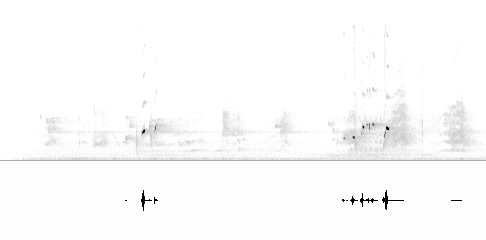
song · Quality B
Rob Nicholson · Goondiwindi Botanic Gardens, Goondiwindi, Queensland, Australia
Call
Isaiah Findley · Zillmere QLD 4034, Australia
Call
Sam Hambly · Perth WA, Australia
Call
Thomas Mesaglio · bushland at southeast corner of Voyager Point, adjacent to Georges River and roughly between the two bridges, Sydney, New South Wales
05 · Behaviour
Habits and haunts
What does a Willie Wagtail eat?
The Willie Wagtail feeds on terrestrial invertebrates, usually foraging in pairs or alone.
The BirdUp app
Log your next Willie Wagtail in the field
A pocket field journal for 850+ Australian birds. Offline-first, smart ID, and a lifelist that travels with you.