BirdUp · Species
Superb Lyrebird
Menura novaehollandiaeLatham, 1801
Updated
Also known asWeringerongBullen-bullen
At a glance
The Superb Lyrebird is a very large bird, about 76–103 cm long, endemic to Australia. It can be seen year-round.
- Size
- 76–103 cm
- Origin
- Endemic
- Best seen
- Year-round
- Commonness
- Endemic
- Movement
- Resident
01 · Identification
How to tell it apart
What does a Superb Lyrebird look like?
The Superb Lyrebird is a very large bird, about 76–103 cm long and weighing 721–1200 g, identified by its spectacular lyre-shaped tail (male); long, broad, unadorned tail (female/immature); large, fowl-like body; and brown plumage with reddish-tinged flight feathers.
The Superb Lyrebird is a massive, pheasant-sized terrestrial songbird, reaching 80 to 100 centimetres in length. Its plumage is predominantly dark grey-brown with rufous-tinted wings and a paler grey throat. The male is unmistakable due to his spectacular tail, featuring two broad, S-shaped outer lyrates patterned with chestnut and white, which enclose twelve delicate, silvery filamentary feathers. During display, he flips this tail forward over his head, veiling his body in a shimmering canopy. Females and immatures are similar in body colour but possess shorter, simpler tails. Both sexes have exceptionally strong, dark legs and long claws adapted for raking through deep mulch. Its voice is a masterclass in mimicry; roughly 80 percent of its song consists of near-perfect imitations of other species, such as the Laughing Kookaburra and Crimson Rosella, woven between its own loud whistles and metallic clicks. Singing occurs year-round but is most intense during the winter breeding season when males perform from low, circular mounds of cleared earth. Mainly terrestrial and solitary, the lyrebird is a vigorous forager that scratches through moist leaf litter for invertebrates. Flight is heavy and limited; it typically runs quickly or uses its wings to jump into low branches and glide down to the forest floor. It inhabits rainforests and wet sclerophyll forests across southeastern Australia, from the New South Wales-Queensland border through Victoria, with a thriving introduced population in Tasmania. It is best distinguished from the related Albert’s Lyrebird by the latter’s deeper rufous plumage and the male's lack of broad, patterned lyrate feathers. Unlike the Superb Lyrebird, the Albert's Lyrebird is restricted to a small region in the far subtropics.
Description · BirdUp · CC BY-SA 4.0
- 01
Spectacular lyre-shaped tail (male)
Two large, ornate outer feathers curve outwards, framing numerous silvery, filament-like plumes.
- 02
Long, broad, unadorned tail (female/immature)
Lacks the male's ornate plumes, consisting of simple, broad, dark brown feathers, often held drooping.
- 03
Large, fowl-like body
Pheasant-sized with a predominantly dark brown and grey-brown body.
- 04
Brown plumage with reddish-tinged flight feathers
Upperparts are dark brown; red tinge is noticeable on wings, especially in flight.
03 · When
When to look
When can you see a Superb Lyrebird?
The Superb Lyrebird is present across its Australian range year-round, so it can be seen in any month.
- Jan
- Feb
- Mar
- Apr
- May
- Jun
- Jul
- Aug
- Sep
- Oct
- Nov
- Dec
04 · Voice
What it sounds like
What sound does a Superb Lyrebird make?
Recordings of the Superb Lyrebird on BirdUp feature its song.
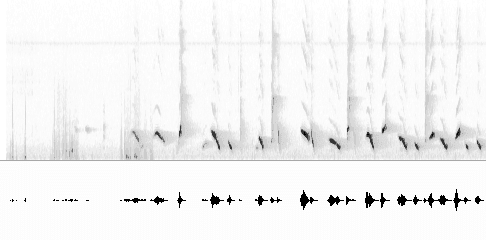
song · Quality A
James Ray · Blue Mountains (near Blue Mountains National Park), Blue Mountains City Council, New South Wales, Australia
song · Quality A
James Ray · Faulconbridge, Blue Mountains City Council, New South Wales, Australia
Call
Sockrosma · New England National Park, Brinerville, NSW, AU
Call
Sockrosma · New England National Park, Brinerville, NSW, AU
05 · Behaviour
Habits and haunts
What does a Superb Lyrebird eat?
The Superb Lyrebird feeds on seeds and terrestrial invertebrates, usually foraging alone.
The BirdUp app
Log your next Superb Lyrebird in the field
A pocket field journal for 850+ Australian birds. Offline-first, smart ID, and a lifelist that travels with you.