Australia
SpeciesField NotesLog inDownload

Field notes

Stay in the loop

Get updates, new features, and Australian birding news.

By subscribing, I agree to receive BirdUp Australia updates, new features, and Australian birding news.

Australia
Download for iOSDownload for AndroidSpeciesField NotesRSSNewsletterBrandPrivacyTerms

BirdUp Australia Pty Ltd © 2026. Made in Australia for Australian birders.

  1. Species
  2. ›
  3. Pachycephalidae
  4. ›
  5. Pachycephala
  6. ›
  7. Rufous Whistler
Rufous Whistler
Photo · (c) Donald Davesne, some rights reserved (CC BY)

BirdUp · Species

Rufous Whistler

Pachycephala rufiventris(Latham, 1801)

Updated 11 June 2026

Conservation status: Least ConcernOrigin: Native
Order
PASSERIFORMES
Family
Pachycephalidae
Genus
Pachycephala

At a glance

The Rufous Whistler is a small bird, about 15–18 cm long, listed as Least Concern and native to Australia. It can be seen year-round.

Size
15–18 cm
Conservation status
Least Concern
Origin
Native
Best seen
Year-round
Commonness
Very common
  • Identification
  • Where
  • When
  • Voice
  • Behaviour
  • Gallery

01 · Identification

How to tell it apart

What does a Rufous Whistler look like?

The Rufous Whistler is a small bird, about 15–18 cm long and weighing 17–52 g.

The rufous whistler is a species of whistler found in New Caledonia and Australia. Predominantly a reddish-brown and grey bird, it makes up for its subdued plumage with its song-making ability. Like many other members of the Pachycephalidae, it has a variety of musical calls.

Description · wikipedia · CC BY-SA 4.0

Field specs

Length
15–18 cm
Weight
17–52 g
Wingspan
26 cm

Measurements · avonet · CC BY 4.0

Field tips

behaviour

  • This species is almost never seen on the ground, preferring to remain perched upright in the mid-to-upper canopy.

plumage

  • Adult males feature a bright white throat and rufous underparts, separated by a black breast band that extends upward to form a dark facial mask.
  • Females and immature birds lack the male's bold colors, instead showing dull brownish-grey upperparts and heavy, dark vertical streaking across a pale chest and belly.

size_and_shape

  • Observe the stocky, 'big-headed' silhouette and a notably long, narrow tail that often appears slightly notched or forked at the tip.

voice

  • Listen for a vigorous, musical song consisting of rapid, ringing notes that often concludes with an explosive, whip-like 'e-chong'.

03 · When

When to look

When can you see a Rufous Whistler?

The Rufous Whistler is present across its Australian range year-round, so it can be seen in any month.

  1. Jan
  2. Feb
  3. Mar
  4. Apr
  5. May
  6. Jun
  7. Jul
  8. Aug
  9. Sep
  10. Oct
  11. Nov
  12. Dec

04 · Voice

What it sounds like

What sound does a Rufous Whistler make?

Recordings of the Rufous Whistler on BirdUp feature its song.
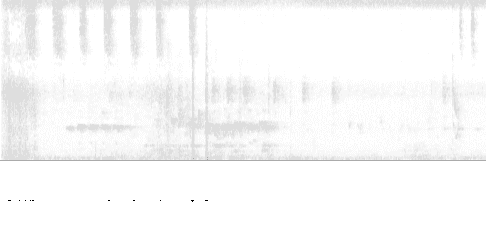
Sonogram of song

song · Quality A

James Ray · Faulconbridge, Blue Mountains City Council, New South Wales, Australia

2:56

Call

Peter Crowcroft · Anglesea VIC 3230, Australia

Call

Will Cornwell · Bungwahl NSW 2423, Australia

Call

Tim · Blue Mountains, NSW, Australia

05 · Behaviour

Habits and haunts

What does a Rufous Whistler eat?

The Rufous Whistler feeds on terrestrial invertebrates, usually foraging in pairs or alone.

06 · Gallery

Plumage up close

2 photos

The BirdUp app

Log your next Rufous Whistler in the field

A pocket field journal for 850+ Australian birds. Offline-first, smart ID, and a lifelist that travels with you.

Get the appRead field notes
Spotted something wrong on this page? Report incorrect info

02 · Where

Where to find it

Where does the Rufous Whistler live in Australia?

The Rufous Whistler is native to Australia, recorded across 86 of Australia’s bioregions, with a core range spanning australia and New Caledonia.

BreedingAustralia and New Caledonia

Distribution from BirdUp Australia community data

Legend

  • Resident
  • Breeding

8 regions recorded