BirdUp · Species
Pied Butcherbird
Cracticus nigrogularis(Gould, 1837)
Updated
At a glance
The Pied Butcherbird is a medium-sized bird, about 28–32 cm long, endemic to Australia. It can be seen year-round.
- Size
- 28–32 cm
- Origin
- Endemic
- Best seen
- Year-round
- Commonness
- Endemic
01 · Identification
How to tell it apart
What does a Pied Butcherbird look like?
The Pied Butcherbird is a medium-sized bird, about 28–32 cm long and weighing 89–169 g, identified by its solid black hood and throat bib; broad, complete white collar; clean white rump; and large, hook-tipped bill.
The pied butcherbird is a songbird native to Australia. Initially described by John Gould in 1837, it is a black-and-white bird 28 to 32 cm long with a long, hooked bill. Its head and throat are black, making a distinctive hood; the mantle and much of the tail and wings are also black. The neck, underparts, and outer wing feathers are white. The juvenile and immature birds are predominantly brown and white. As they mature, black feathers replace their brown feathers. There are two recognised subspecies of pied butcherbird.
Description · wikipedia · CC BY-SA 4.0
- 01
Solid black hood and throat bib
Extends from the crown down to the upper breast, creating a sharp, clean-edged 'hood' that contrasts with the white collar.
- 02
Broad, complete white collar
A striking, pure white band encircles the neck, cleanly separating the black hood from the black back and mantle.
- 03
Clean white rump
Contrasts sharply with the black back and black-tipped tail. A very conspicuous feature, especially in flight.
- 04
Large, hook-tipped bill
Bill is robust, pale blue-grey at the base with a black, sharply hooked tip, characteristic of the butcherbird family.
03 · When
When to look
When can you see a Pied Butcherbird?
The Pied Butcherbird is present across its Australian range year-round, so it can be seen in any month.
- Jan
- Feb
- Mar
- Apr
- May
- Jun
- Jul
- Aug
- Sep
- Oct
- Nov
- Dec
04 · Voice
What it sounds like
What sound does a Pied Butcherbird make?
Recordings of the Pied Butcherbird on BirdUp feature its song.
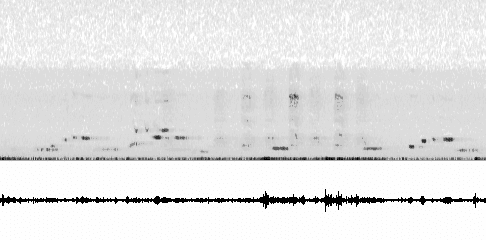
song · Quality A
Ruslan · Margate, Moreton Bay Region, Queensland, Australia
Call
Thomas Mesaglio · Kakadu Highway south of Mary River Ranger Station, Kakadu NP, Northern Territory
Call
Martin Rady · Burleigh Head National Park, Burleigh Heads QLD 4220, Australia
Call
Corin · Raleigh NSW 2454, Australia
05 · Behaviour
Habits and haunts
What does a Pied Butcherbird eat?
The Pied Butcherbird feeds on terrestrial invertebrates and terrestrial vertebrates, usually foraging in pairs or alone.
06 · Gallery
Plumage up close
2 photos
The BirdUp app
Log your next Pied Butcherbird in the field
A pocket field journal for 850+ Australian birds. Offline-first, smart ID, and a lifelist that travels with you.