BirdUp · Species
Little Corella
Cacatua sanguineaGould, 1843
Updated
Also known asBirdirra
- Order
- PSITTACIFORMES
- Family
- Cacatuidae
- Genus
- Cacatua
At a glance
The Little Corella is a large bird, about 35–40 cm long, listed as Least Concern and native to Australia. It can be seen year-round.
- Size
- 35–40 cm
- Conservation status
- Least Concern
- Origin
- Native
- Best seen
- Year-round
- Commonness
- Very common
01 · Identification
How to tell it apart
What does a Little Corella look like?
The Little Corella is a large bird, about 35–40 cm long and weighing 340–635 g.
The Little Corella is a compact, stocky white cockatoo measuring 35–40 cm. It is characterized by a striking patch of bare, fleshy, blue-grey skin around the eyes and a subtle wash of salmon-pink between the eye and the pale, short bill. Unlike other corellas, its upper and lower mandibles are roughly equal in length. In flight, a pale yellow wash is visible on the undersides of the wings and tail. It possesses a short white crest, usually held flat against the crown. The sexes are visually identical in the field. Its voice is a high-pitched, rhythmic "yakka-yakka" or a multi-syllabic, rolling screech. These calls are notably more playful and higher-pitched than the harsh, grating croaks of the Sulphur-crested Cockatoo. In large flocks, they produce a constant, deafening chatter audible from several kilometres away. Highly gregarious and energetic, they congregate in flocks numbering in the thousands, often mixing with Galahs. Primarily ground-feeders, they waddle across lawns and paddocks to dig for seeds, corms, and tubers. They are famously acrobatic and playful, frequently seen hanging upside down from power lines or sliding down corrugated metal roofs. Flight is strong and direct with quick, shallow wingbeats and occasional glides. Widespread across most of mainland Australia, they inhabit open environments including arid grasslands, tropical savannas, and urban parklands. They avoid dense forests and are particularly common around interior waterholes and suburban playing fields. Distinguish it from the Long-billed Corella by its shorter bill and the absence of a bright red throat patch. It is significantly smaller than the Sulphur-crested Cockatoo and lacks that species’ yellow crest and black bill. In Western Australia, it is distinguished from the Western Corella by its shorter upper mandible.
Description · BirdUp · CC BY-SA 4.0
03 · When
When to look
When can you see a Little Corella?
The Little Corella is present across its Australian range year-round, so it can be seen in any month.
- Jan
- Feb
- Mar
- Apr
- May
- Jun
- Jul
- Aug
- Sep
- Oct
- Nov
- Dec
04 · Voice
What it sounds like
What sound does a Little Corella make?
Recordings of the Little Corella on BirdUp feature its call.
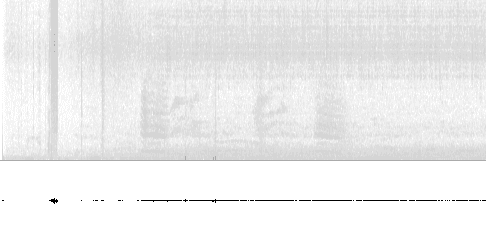
call · Quality A
James Ray · Bronte, Waverley Council, New South Wales, Australia
Call
Thomas Mesaglio · Wategora Reserve along Duck River, Sydney, New South Wales
Call
Rosalie Lawrence · Adelaide SA 5000, Australia
Call
Jaydyn · Griffith Park, Bankstown, NSW, AU
05 · Behaviour
Habits and haunts
What does a Little Corella eat?
The Little Corella feeds on seeds and corms/tubers, usually foraging in flocks.
06 · Gallery
Plumage up close
6 photos
The BirdUp app
Log your next Little Corella in the field
A pocket field journal for 850+ Australian birds. Offline-first, smart ID, and a lifelist that travels with you.