BirdUp · Species
Grey Butcherbird
Cracticus torquatus(Latham, 1801)
Updated
Also known asKoolardiTarwon
At a glance
The Grey Butcherbird is a medium-sized bird, about 27–30 cm long, listed as Least Concern and endemic to Australia. It can be seen year-round.
- Size
- 27–30 cm
- Conservation status
- Least Concern
- Origin
- Endemic
- Best seen
- Year-round
- Commonness
- Endemic
- Movement
- Resident
01 · Identification
How to tell it apart
What does a Grey Butcherbird look like?
The Grey Butcherbird is a medium-sized bird, about 27–30 cm long and weighing 68–119 g, identified by its bold grey-and-white head pattern; large, two-toned bill with hooked tip; white wing panel on primaries; and uniform grey back and wings.
The Grey Butcherbird is a medium-sized (27–30 cm), stocky songbird easily recognized by its robust, pale blue-grey bill with a conspicuous black hooked tip. Adults feature a jet-black head and face contrasting sharply with a white throat and a prominent partial white collar. The back is a soft lead-grey, while the underparts are white to off-grey. While sexes are similar, juveniles are distinctly different, appearing brownish and streaky with a buff-coloured bill and less defined facial markings. The song is a highlight of the Australian bush—a series of rich, flute-like piping notes and liquid trills, often performed as an intricate, coordinated duet between pairs. They are also accomplished mimics but will emit a loud, harsh chattering scold when territorial or alarmed. Highly predatory, this species typically perches motionless in the open, scanning the ground before pouncing on insects, small lizards, or small birds. It is famous for "lardering" its prey—wedging it into a tree fork or impaling it on a spike to hold it while feeding. Flight is fast and direct with steady wingbeats followed by a short glide. Widespread across most of Australia except the extreme tropical north, it is highly adaptable, inhabiting eucalypt forests, mallee scrub, and leafy suburban gardens where it often becomes bold around humans. To distinguish it from the similar Pied Butcherbird, observe the throat; the Grey Butcherbird has a clean white throat, whereas the Pied has a full black bib extending to the breast. The Silver-backed Butcherbird replaces it in the far north and possesses a paler back, though their ranges rarely overlap. It is much smaller and more compact than an Australian Magpie or Pied Currawong, both of which lack the distinctive hooked bill.
Description · BirdUp · CC BY-SA 4.0
- 01
Bold grey-and-white head pattern
Slate-grey head, nape, and upper breast sharply contrast with a clean white throat and belly.
- 02
Large, two-toned bill with hooked tip
Base is pale blue-grey, tip is black and sharply hooked.
- 03
White wing panel on primaries
A clear white patch is visible on the primary flight feathers, often noticeable at rest and especially in flight.
- 04
Uniform grey back and wings
Upperparts are a uniform soft grey.
03 · When
When to look
When can you see a Grey Butcherbird?
The Grey Butcherbird is present across its Australian range year-round, so it can be seen in any month.
- Jan
- Feb
- Mar
- Apr
- May
- Jun
- Jul
- Aug
- Sep
- Oct
- Nov
- Dec
04 · Voice
What it sounds like
What sound does a Grey Butcherbird make?
Recordings of the Grey Butcherbird on BirdUp feature its song.
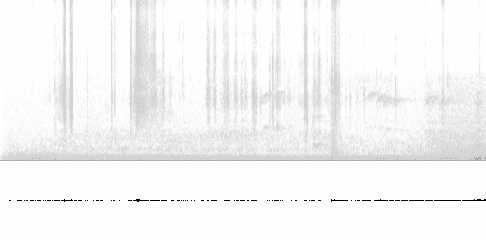
song · Quality B
James Ray · Beaconsfield, Council of the City of Sydney, New South Wales, Australia
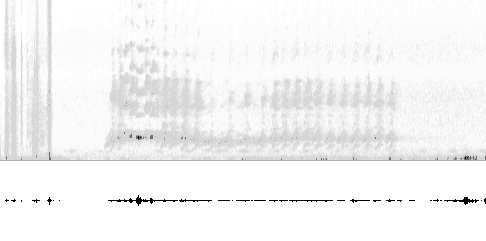
song · Quality B
James Ray · Faulconbridge, Blue Mountains City Council, New South Wales, Australia
Call
Donald Davesne · Melbourne VIC, Australia
Call
John Cull · Heathmont VIC 3135, Australia
05 · Behaviour
Habits and haunts
What does a Grey Butcherbird eat?
The Grey Butcherbird feeds on terrestrial invertebrates and terrestrial vertebrates, usually foraging in pairs or flocks or alone.
06 · Gallery
Plumage up close
5 photos
The BirdUp app
Log your next Grey Butcherbird in the field
A pocket field journal for 850+ Australian birds. Offline-first, smart ID, and a lifelist that travels with you.