BirdUp · Species
Common Myna
Acridotheres tristis(Linnaeus, 1766)
Updated
- Order
- PASSERIFORMES
- Family
- Sturnidae
- Genus
- Acridotheres
At a glance
The Common Myna is a medium-sized bird, about 23–26 cm long, listed as Least Concern. It can be seen year-round.
- Size
- 23–26 cm
- Conservation status
- Least Concern
- Origin
- Introduced
- Best seen
- Year-round
- Commonness
- Very common
01 · Identification
How to tell it apart
What does a Common Myna look like?
The Common Myna is a medium-sized bird, about 23–26 cm long and weighing 82–143 g, identified by its bare yellow skin patch behind eye, bright yellow bill and legs, large white primary patch and white-tipped tail.
The common myna or Indian myna, sometimes spelled mynah, is a bird in the family Sturnidae, native to Asia. An omnivorous open woodland bird with a strong territorial instinct, the common myna has adapted extremely well to urban environments.
Description · wikipedia · CC BY-SA 4.0
- 01
Bare yellow skin patch behind eye
A teardrop-shaped patch of featherless yellow skin extends back from the eye.
- 02
Bright yellow bill and legs
The strong, unstreaked yellow colour of the bill and legs is consistent and matches the bare skin on the face.
- 03
Large white primary patch
A prominent white patch is visible on the folded wing and creates a bright flash during flight.
- 04
White-tipped tail
The dark tail features a distinct, broad white band at the tip, conspicuous when perched.
03 · When
When to look
When can you see a Common Myna?
The Common Myna is present across its Australian range year-round, so it can be seen in any month.
- Jan
- Feb
- Mar
- Apr
- May
- Jun
- Jul
- Aug
- Sep
- Oct
- Nov
- Dec
04 · Voice
What it sounds like
What sound does a Common Myna make?
Recordings of the Common Myna on BirdUp feature its song and call.
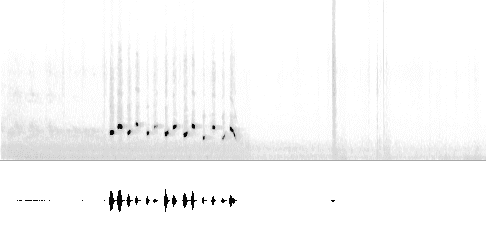
song · Quality B
James Ray · Collins St at Botany Rd (near Beaconsfield), Council of the City of Sydney, New South Wales, Australia
call · Quality B
James Ray · Grose Rd after Chapman Pde (near Faulconbridge), Blue Mountains City Council, New South Wales, Australia
song · Quality B
James Ray · Grose Rd after Chapman Pde (near Faulconbridge), Blue Mountains City Council, New South Wales, Australia
Call
Nick Swanson · Rochedale South QLD 4123, Australia
05 · Behaviour
Habits and haunts
What does a Common Myna eat?
The Common Myna feeds on seeds, terrestrial invertebrates and terrestrial vertebrates, usually foraging in pairs or flocks or alone.
06 · Gallery
Plumage up close
6 photos
07 · Similar species
Could be confused with
A few Australian birds resemble the Common Myna. Here’s how to tell them apart at a glance.
| Species | How to tell them apart |
|---|---|
| Often confused, the Noisy Miner is an introduced species to Australia and is identifiable by it's predominantly gray with a black crown body colouring vs the Common Mynah's chocolate-brown body with a blackish head. |
The BirdUp app
Log your next Common Myna in the field
A pocket field journal for 850+ Australian birds. Offline-first, smart ID, and a lifelist that travels with you.