BirdUp · Species
Australian Boobook
Ninox boobook(Latham, 1801)
Updated
Also known asGwigwi
At a glance
The Australian Boobook is a medium-sized bird, about 30–35 cm long, native to Australia. It can be seen year-round.
- Size
- 30–35 cm
- Origin
- Native
- Best seen
- Year-round
- Commonness
- Very common
- Movement
- Resident
01 · Identification
How to tell it apart
What does an Australian Boobook look like?
The Australian Boobook is a medium-sized bird, about 30–35 cm long and weighing 172–370 g, identified by its large, greenish-yellow eyes; prominent pale spots on brown upperparts; coarsely streaked breast and belly; and rounded head, no ear tufts.
The Australian Boobook is the smallest and most widespread owl on the Australian mainland, measuring 30 to 35 centimetres. This compact bird features a rounded head without ear tufts and predominantly dark chocolate-brown plumage, heavily marked with white or buff spots on the wings and shoulders. The underparts are distinctively streaked and mottled, while the inconspicuous facial disc is highlighted by pale, prominent “eyebrows” and dark patches around eyes that range from greenish-yellow to grey-green. Regional variation is significant: birds in arid inland areas appear pale and sandier, while those in the humid north are smaller and darker with a reddish-brown tint. The most reliable identification feature is its iconic, rhythmic “book-book” or “mo-poke” call, a two-tone whistle with the second note lower in pitch. Other vocalisations include a rapid, vibrating “por-por-por” and a high-pitched screech. Mainly nocturnal and crepuscular, it roosts by day in dense foliage or tree hollows, often huddling close to a trunk to mimic a broken branch. An opportunistic hunter, it pounces from open perches onto large insects, small mammals, or birds with silent, moth-like wingbeats. Extremely adaptable, it inhabits almost every environment with trees, from rainforests and arid mulga to leafy suburban gardens; however, it is absent from Tasmania. It is most often confused with the larger Barking Owl, which features piercing yellow eyes, vertical breast streaks, and a dog-like “wuff-wuff” call. The much larger Powerful Owl is distinguished by distinct V-shaped chevrons on its underparts.
Description · BirdUp · CC BY-SA 4.0
- 01
Large, greenish-yellow eyes
Brightly colored and appear prominent on the face, a key identifier.
- 02
Prominent pale spots on brown upperparts
Numerous off-white to buff spots create a heavily mottled appearance on the dark brown back, wings, and head.
- 03
Coarsely streaked breast and belly
Underparts are whitish or buff with broad, messy brown vertical streaks and mottling.
- 04
Rounded head, no ear tufts
The head has a smooth, round silhouette, lacking the prominent feather tufts seen on some other owl species.
03 · When
When to look
When can you see an Australian Boobook?
The Australian Boobook is present across its Australian range year-round, so it can be seen in any month.
- Jan
- Feb
- Mar
- Apr
- May
- Jun
- Jul
- Aug
- Sep
- Oct
- Nov
- Dec
04 · Voice
What it sounds like
What sound does an Australian Boobook make?
Recordings of the Australian Boobook on BirdUp feature its song.
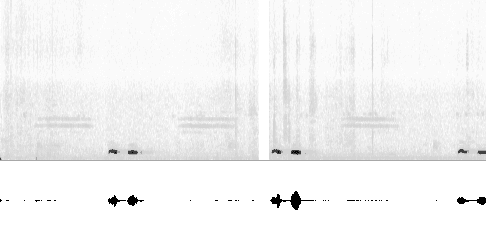
song · Quality B
James Ray · Faulconbridge, Blue Mountains City Council, New South Wales, Australia
Call
smathichong · Moondine Dr, Wembley, WA, AU
Call
graeme lunt · Lal Lal VIC 3352, Australia
Call
graeme lunt · Moorabool - West, AU-VI, AU
05 · Behaviour
Habits and haunts
What does an Australian Boobook eat?
The Australian Boobook feeds on terrestrial invertebrates and terrestrial vertebrates, usually foraging in pairs or alone.
06 · Gallery
Plumage up close
3 photos
The BirdUp app
Log your next Australian Boobook in the field
A pocket field journal for 850+ Australian birds. Offline-first, smart ID, and a lifelist that travels with you.